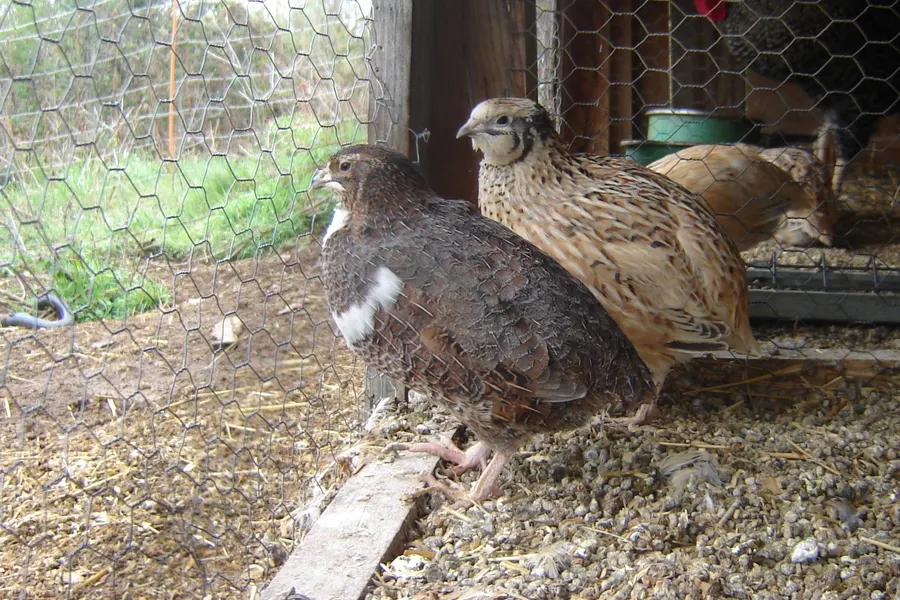
Quail hutches: size, design and what to avoid
What makes a good quail hutch: how much floor space, low roof or soft netting, covered end, 13 mm weldmesh, litter, dust bath, and keeping out rats and foxes.
How much space?
The figure most often quoted is about 0.1 m² (1 sq ft) per bird, which comes from caged production. In a garden hutch we'd give them double that: around 0.2 m² each, so six quail need roughly 1.2 m² of floor. More space means less pecking, cleaner birds and better laying. The hutch planner works it out.
The roof: low or soft
A frightened quail flies straight up. In a tall hutch with a hard roof, that's how they injure their heads. Either keep the roof low (around 30 cm or less) so they can't build speed, or fit a soft netting ceiling under a higher roof.
Shelter
One end should be fully enclosed: solid sides and roof, out of the wind and rain. Quail cope with cold far better than with wet and draughts.
Predator-proofing
- 13 mm weldmesh, not chicken wire. Rats, stoats and weasels get through chicken wire.
- Raised off the ground on legs, or with mesh under the floor if it's on the ground.
- Proper catches that a fox can't nose open.
- Check for gaps where mesh meets wood.
Floor
A solid floor with 3–5 cm of dust-extracted wood shavings or chopped straw is easy on their feet. Bare wire floors are hard on feet. Add a shallow tray of dry sand for dust-bathing and a little cover to hide under, like a low wooden "A-frame" or a bunch of dried grasses.
Where to put it
Sheltered from prevailing wind, out of full afternoon sun in summer, on level ground, and where you'll see it every day. Close enough to the house to hear trouble at night.
Checked November 2026. General information, not veterinary advice.